


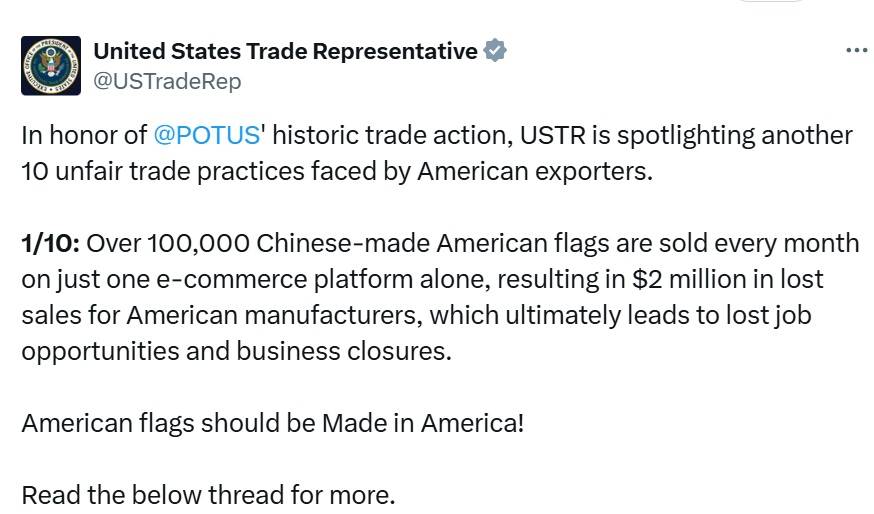
- 美國貿易代表署列出10項全球對美出口不公平貿易行為,包括中國製美國國旗、日本高關稅、歐盟碳稅等,凸顯全球貿易壁壘問題
- USTR強調,這些措施每年損害美國數十億美元出口,涉及農產品、醫療設備、能源、海鮮等多種產業
- 這份清單為拜登政府發動貿易行動提供依據,未來美方可能針對重點市場提出更多關稅或談判策略
以下是美國貿易代表署(USTR)4月8日在社群媒體X發表的10大不公平貿易行為的中英文原文。
為了配合總統歷史性的貿易行動,美國貿易代表署(USTR)特別點出10項美國出口商正面臨的不公平貿易行為。
1/10:大量中國製美國國旗充斥市場
光是在某一個電商平台上,每個月就賣出超過10萬面中國製的「美國國旗」,導致美國國旗製造商每年損失200萬美元的銷售額,進而造成工作機會流失與企業倒閉。美國國旗理應由美國製造!
2/10:印度與泰國對美國燃料乙醇設限
印度全面禁止進口用作燃料的美國乙醇,泰國則要求燃料乙醇進口需經審批,但自2005年以來未曾核發過進口許可。如果能打開這兩個市場,每年可為美國帶來至少4.14億美元的額外出口收益。
3/10:安哥拉限制進口肉品
安哥拉宣布,自2025年7月31日起,將限制牛肉、豬肉和家禽產品的進口許可。在2024年,美國對安哥拉的家禽出口額達1.36億美元。安哥拉是美國第九大家禽出口市場,也是非洲最大市場。這項新限制將對美國農民和牧場主造成重大衝擊。
4/10:日本對美國海鮮徵收高額關稅
日本對美國海鮮出口徵收最高達10.5%的關稅,並對部分魚類採取複雜的配額制度,讓美國出口商難以穩定進入市場。這些不公平的做法讓美國海鮮業者每年損失約1.89億美元,對依賴出口維生的漁民和沿海社區造成影響。
5/10:歐盟「零毀林供應鏈」法規
歐盟的「無毀林供應鏈法」(EUDR)要求包括牛、可可、橡膠與木材在內的七種產品,必須符合繁瑣的合規要求,如盡職調查與地理位置數據,否則禁止進口。預估此法規將影響美國每年約 86 億美元的農業與工業出口。
6/10:歐盟碳邊境調整機制(CBAM)
歐盟CBAM要求出口產品須通過昂貴的碳排放審查程序,恐降低美國出口商相較於高排放國家(例如中國)的競爭優勢。此政策削弱公平競爭,懲罰美國企業,反而讓歐盟本土企業受益。預計這項機制將影響美國每年約47億美元的出口。
7/10:南美非法伐木與非法採礦
在南美,尤其是巴西、秘魯、哥倫比亞與厄瓜多,非法伐木和採礦不僅破壞環境,也讓守法的美國企業面臨不公平競爭。這些行為多與跨國犯罪集團有關,導致全球大宗商品價格被拉低,合法的美國出口商因此被削弱。
8/10:阿爾及利亞設限美國醫療產品
阿爾及利亞對仿製藥和醫療設備設置重重限制,成為美國出口商的巨大障礙。這些不公平措施阻礙美國企業進入市場,降低競爭性,也讓阿爾及利亞患者難以取得價格合理、品質優良的醫療產品,同時削弱美國相關產業的全球競爭力。
9/10:肯亞對美國玉米徵收高達50%關稅
肯亞對美國玉米徵收50%的高額關稅,並設下繁瑣的法規要求,幾乎等於封鎖美國玉米進口。肯亞目前的飼料玉米市場約5,000萬美元,預計到 2027 年有望成長30%。若能打開市場,將可為美國農民創造公平競爭的環境。
10/10:奈及利亞禁止25類產品進口
奈及利亞對25項產品類別下達進口禁令,特別衝擊農產品、藥品、飲品與消費品。被限制的項目包括牛肉、豬肉、家禽、果汁、藥品與烈酒,這些政策大幅減少了美國企業在奈及利亞市場的銷售機會。
如需了解更多美國出口商面對的不公平貿易行為,請參閱《2025年國家貿易評估報告》。
In honor of @POTUS ' historic trade action, USTR is spotlighting another 10 unfair trade practices faced by American exporters. 1/10: Over 100,000 Chinese-made American flags are sold every month on just one e-commerce platform alone, resulting in $2 million in lost sales for American manufacturers, which ultimately leads to lost job opportunities and business closures. American flags should be Made in America!
2/10: India bans imports of U.S. ethanol for fuel use. Similarly, Thailand restricts imports of fuel ethanol, requiring approval and issuance permits, and hasn't approved an import permit for fuel ethanol since 2005. Securing market access to India and Thailand for exports of U.S. fuel ethanol would result in at least an additional $414 million in annual export value.
3/10: Angola recently announced it will restrict import licenses for beef, pork, and poultry products starting July 31, 2025. In 2024, U.S. poultry exports to Angola were valued at $136 million. Angola is the 9th largest market for U.S. poultry exports globally and the largest market for U.S. poultry on the African continent. These new trade restrictions will significantly impact American farmers and ranchers.
4/10: Japan maintains tariffs of up to 10.5% on U.S. seafood exports, and also subjects several types of fish to a complex import quota system, which makes it difficult for U.S. exporters to enter the market on a reliable basis. These unfair trade practices cost the U.S. seafood industry an estimated $189 million annually in lost export potential, hurting American fishers and coastal communities that depend on global market access to sustain their livelihoods.
5/10: The EU's Deforestation-free Supply Chain Regulation (EUDR) aims to prohibit imports of seven products—including cattle, cocoa, rubber, and wood—unless exporters meet various burdensome compliance requirements, including due diligence and geolocation data. It is estimated the EUDR will potentially impact $8.6 billion worth of annual U.S. agricultural and industrial exports.
6/10: The EU's Carbon Border Adjustment Mechanism (CBAM) imposes costly verification measures and could reduce U.S. exporters' advantage in the EU market over high-emissions competitors, namely China. These EU regulations undermine fair competition, penalizing U.S. companies while providing advantages to EU-based competitors. It is estimated the EU CBAM will impact $4.7 billion worth of annual U.S. exports.
7/10: Illegal logging and illegal mining in South America, particularly in Brazil, Peru, Colombia, and Ecuador, fuel environmental degradation and create unfair competition that harms U.S. businesses committed to responsible sourcing and compliance with environmental laws. These illicit activities, which usually involve transnational criminal organizations, distort global commodity markets by driving down prices and allowing bad actors to undercut legitimate American exporters.
8/10: Algeria's restrictions on generic pharmaceutical products and medical devices create significant barriers for U.S. exporters. These unfair trade practices limit market access for American companies, reduce competition, and hinder the ability of U.S. firms to provide affordable, high-quality medical products to Algerian patients. These barriers reduce export opportunities and undercut the global competitiveness of U.S. pharmaceutical and medical technology industries.
9/10: Kenya imposes a 50% tariff on imports of U.S. corn, and imposes burdensome regulatory requirements, effectively blocking U.S. exports of corn. Kenya's market for feed corn is currently estimated at $50 million, with a potential to grow by 30% by 2027. Securing market access for American farmers will ensure they can compete on a level playing field.
10/10: Nigeria's import ban on 25 different product categories impacts U.S. exporters, particularly in agriculture, pharmaceuticals, beverages, and consumer goods. Restrictions on items like beef, pork, poultry, fruit juices, medicaments, and spirits limit U.S. market access and reduce export opportunities. These policies create significant trade barriers that lead to lost revenue for U.S. businesses looking to expand in the Nigerian market.
For additional information on unfair trade practices faced by American exporters, please see the 2025 National Trade Estimate Report.
圖資來源:X.com
資料來源: 工商時報